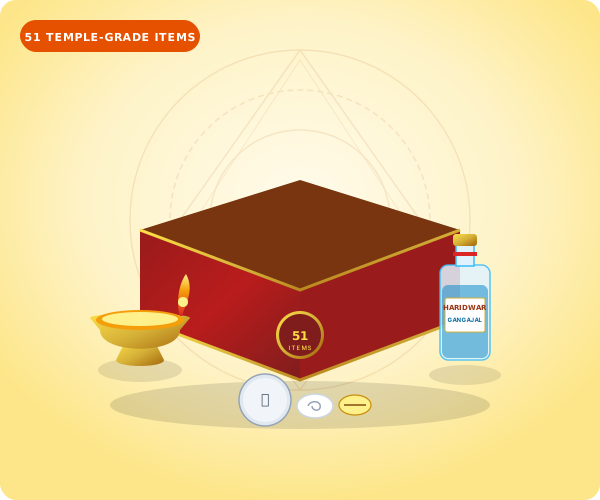
Diwali 2026 falls on Sunday, November 8, 2026 (Kartik Krishna Amavasya). For global Indian households in the USA, UK, and Canada, the primary invocation of Goddess Mahalakshmi and Lord Ganesha must occur during Pradosh Kaal under a Sthir Lagna (Fixed Ascendant). According to the Skanda Purana, worship performed when the Fixed Ascendant prevails establishes wealth that cannot be diminished by temporal misfortune.
1. Astrological Significance & Tithi of Diwali 2026
Deepawali marks the triumphant celestial alignment where the Moon and the Sun enter Swati Nakshatra in the sign of Libra (Tula Rashi). On this night, the cosmic portal of Mahalakshmi expands, showering supreme divine benevolence upon the earth plane. The Kartik Amavasya tithi begins on the afternoon of November 8 and extends into the following midday. For householders (Grihasthas), the evening Pradosh period that overlaps with Amavasya is the solitary window sanctified for Lakshmi Sthapana.
"दीपज्योतिः परंब्रह्म दीपज्योतिर्जनार्दनः। दीपो हरतु मे पापं दीपज्योतिर्नमोऽस्तु ते॥"
Transliteration: Deepajyotih Parambrahma Deepajyotir Janaardanah | Deepo Haratu Me Paapam Deepajyotir Namostute ||
Meaning: The sacred flame of the lamp represents the Supreme Absolute Brahman; it embodies Lord Janardana Himself. May this sacred flame dispel our inner and outer darkness. We bow to the light of the divine lamp.
2. City-Wise Pradosh Kaal Muhurat Timetable (USA, UK, Canada)
Because local sunset varies significantly between latitudes, overseas devotees must never follow an Indian Standard Time (IST) calendar for local prayers. The table below provides the calculated Sthir Vrishabha Lagna Muhurat windows calculated precisely for sunset in key diaspora metropolitan hubs for November 8, 2026:
| City / Region | Local Time Zone | Pradosh Kaal Window | Optimal Sthir Lagna |
|---|---|---|---|
| New York & New Jersey (USA) | EST (UTC-5) | 04:52 PM – 07:28 PM | 05:48 PM – 07:44 PM EST |
| Dallas & Houston, Texas (USA) | CST (UTC-6) | 05:31 PM – 08:06 PM | 06:12 PM – 08:08 PM CST |
| Chicago, Illinois (USA) | CST (UTC-6) | 04:39 PM – 07:15 PM | 05:22 PM – 07:18 PM CST |
| San Francisco & San Jose (USA) | PST (UTC-8) | 05:05 PM – 07:40 PM | 05:52 PM – 07:49 PM PST |
| London & Leicester (UK) | GMT (UTC+0) | 04:22 PM – 06:58 PM | 05:12 PM – 07:08 PM GMT |
| Toronto & Brampton (Canada) | EST (UTC-5) | 04:58 PM – 07:34 PM | 05:54 PM – 07:50 PM EST |
| Vancouver (Canada) | PST (UTC-8) | 04:41 PM – 07:18 PM | 05:32 PM – 07:29 PM PST |
3. Pradosh Kaal vs. Nishita Kaal: Shastric Guidance for Householders
A common question among overseas Hindus is whether they should pray at midnight (Nishita Kaal) or at twilight (Pradosh Kaal). According to the Dharmasindhu and Nirnayasindhu scriptures:
- Pradosh Kaal (Twilight to 2 hours after sunset): Mandatory for householders (Grihasthas). This period aligns with stable Earth element energy, welcoming peaceful family prosperity, domestic harmony, and longevity.
- Nishita Kaal (Midnight interval): Reserved primarily for Tantric practitioners, sadhakas, and sannyasis invoking Kali, Bhairava, or specialized nocturnal Mahavidya sadhanas. Householders are advised to conclude their main Lakshmi-Ganesh Puja during Pradosh Kaal and maintain an Akhand Deepam through midnight.
4. Complete 51-Item Diwali Puja Samagri Checklist
Nothing halts the sanctified flow of a Vedic ritual faster than discovering a missing item mid-mantra. Every item in the traditional 51-piece protocol serves an energetic function. Here is the itemized Shastric breakdown:
💧 Category A: Abhishek & Purification
- ☑️ Haridwar Gangajal (Sealed Brahma Kund glass flask)
- ☑️ Panchamrit Offering Cup (Pure copper or silver)
- ☑️ Darbha / Kusha Grass Ring (For Pavitri finger protection)
- ☑️ Kashi Ashtagandha Chandan (Pure yellow sandalwood paste)
- ☑️ Roli Kumkum (Chemical-free natural turmeric red)
- ☑️ Haldi Ganth (Raw Turmeric Knots) (5 consecrated units)
👑 Category B: Lakshmi Shringaar & Aavahan
- ☑️ Lakshmi-Ganesh Silver Plated Coin (10g consecrated)
- ☑️ Natural Gomti Chakra (Set of 11 sacred vortex stones)
- ☑️ Yellow Cowrie Shells (Peeli Kaudi) (Set of 11 wealth shells)
- ☑️ Kamalgatta (Sacred Lotus Seeds) (Mala or 108 seeds)
- ☑️ Laghu Nariyal (Mini Divine Coconut) (Symbol of Mahalakshmi)
- ☑️ Pure Red Velvet Lal Aasan (With gold zari borders)
🔥 Category C: Deepam & Fragrance (Aroma Therapy)
- ☑️ Handcrafted Solid Brass Kuber Diya (Heavy base)
- ☑️ Pure Cow Ghee Diya Wicks (51 pre-soaked long wicks)
- ☑️ 100% Pure Bhimseni Camphor (Crystalline chemical-free)
- ☑️ Charcoal-Free Sambrani Cups (Pure Guggul resin)
- ☑️ Natural Vedic Ittar / Attar (Mogra and Gulab 3ml)
- ☑️ Akhand Jyot Glass Chimney (Draft protection)
🌾 Category D: Naivedya, Bhog & Sutra
- ☑️ Vedic Janeu Threads (Spun sacred cotton, 2 sets)
- ☑️ Kalawa / Mauli Raksha Sutra (Pure raw dyed cotton)
- ☑️ Akshat (Unbroken Sacred Rice) (Golden turmeric blended)
- ☑️ Supari (Betel Nuts) (5 polished solid nuts)
- ☑️ Lavang & Elaichi Offering Pouch (Cloves & Green Cardamom)
- ☑️ Panchameva Dry Fruits Pack (Cashew, almond, raisin, makhana)
5. Step-by-Step 16-Stage Shodashopachara Lakshmi-Ganesh Puja
The Shodashopachara protocol represents the sixteen honors extended to supreme divine royalty. Follow these stages methodically during the Pradosh Kaal Muhurat:
Stages 1 to 4: Dhyana, Aavahana, Aasana & Padya
Begin by facing East or North. Cleanse yourself with three sips of Gangajal (Achamana). Light your incense and brass diya. Meditate on Lord Ganesha and Goddess Lakshmi. Chanting "ॐ महालक्ष्म्यै नमः आवाहयामि", offer flowers and invite Their presence onto the red velvet Aasan. Sprinkle a drop of water as symbolic washing of the divine feet.
Stages 5 to 8: Arghya, Achamaniya, Snana & Vastra
Offer scented water (Arghya) and Gangajal. Perform the ceremonial snan (bath) of the silver Lakshmi-Ganesh coin using a spoon of milk, curd, honey, sugar, and ghee (Panchamrit), concluding with Brahma Kund Gangajal. Dry with a clean cotton cloth and adorn with the sacred Kalawa Raksha Sutra or red silk chunri as divine garment.
Stages 9 to 12: Yajnopavita, Chandan, Pushpa & Dhoopa
Offer the sacred Janeu thread to Lord Ganesha. Apply fragrant Kashi Ashtagandha chandan and Roli Kumkum tilak to both deities. Place fresh marigold flowers or lotus petals. Ignite the charcoal-free sambrani dhoop cups, wafting the purifying herbal fumes around the altar.
Stages 13 to 16: Deepa, Naivedya, Tamboola & Karpoor Aarti
Showcase the illuminated brass Kuber Deepam. Place the Panchameva dry fruits, sweets, batasha, and fruits as Naivedya bhog. Offer betel nut (supari), cardamom, and clove (Tamboola). Conclude the ceremony by lighting pure Bhimseni camphor in a brass aarti pan while singing "Om Jai Jagdish Hare" and "Om Jai Lakshmi Mata" with the whole family.
6. Kuber Pujan & Digital Bahi Khata (Account Book) Blessing
Lord Kuber is the divine celestial treasurer. While Goddess Lakshmi bestows spiritual and material wealth, Lord Kuber safeguards it against unnecessary loss, legal encumbrances, and fraudulent expenditure.
In modern times, diaspora professionals and entrepreneurs often do not maintain physical ledger books. To perform modern Bahi Khata Pujan: place your company laptop, business diary, checkbook, or investment tablet on the right side of the altar. Draw a sacred Swastika using Roli Kumkum on the cover or keyboard deck (using paper backing). Place 11 Gomti Chakras and yellow cowrie shells on top of the devices while chanting the Kuber Gayatri mantra:
7. Critical Samagri Adulteration Mistakes to Avoid Abroad
Over 85% of pooja items bought from non-specialist ethnic groceries in North America and Western Europe carry hazardous chemical adulterants that negate the spiritual sanctity of the ritual:
- ❌ 1. Burning Synthetic Paraffin Camphor: Compressed circular white tablets sold in most grocery stores are manufactured from toxic petroleum distillates and synthetic camphene. They emit acrid carcinogenic smoke and black soot that harms family lungs and triggers sensitive smoke alarms. True Bhimseni camphor is crystalline, natural, and vaporizes 100% cleanly without leaving any ash.
- ❌ 2. Unsealed or Chemically Chlorinated Water as Gangajal: Plastic bottles labeled as Gangajal often sit unsealed on cargo ships for months or contain municipal tap water treated with chlorine. Sacred rituals demand hermetically sealed Gangajal bottled directly from Har Ki Pauri, Haridwar.
- ❌ 3. Stamped Tin Foil Diyas: Thin stamped tin lamps overheat, tip over easily on carpeted floors, and pose a severe fire hazard. Shastric injunctions stipulate solid cast brass with a weighted base.
8. Devotee Frequently Asked Questions
Q: What should we do with the Lakshmi-Ganesh silver coin and Gomti Chakras after Diwali?
Leave them in the home mandir on the red velvet cloth for three days through Bhai Dooj. Afterwards, wrap the silver coin, 11 Gomti Chakras, and 11 yellow cowries together in a piece of red silk cloth and place them inside your home safe, locker, or commercial cash drawer. This acts as a permanent wealth accumulator throughout the year.
Q: How can we safely burn an Akhand Jyot inside a carpeted American home?
Always place the solid brass diya inside a heavy ceramic or metal tray filled with a shallow layer of uncooked rice or sand. Cover the flame with a heat-resistant borosilicate glass chimney to shield it from HVAC drafts and keep it safely out of reach of curious pets or children.